
Tate County Multi-Day Arrest Log
The official Tate County OCV inmate feed is the county's multi-day booking log. Search and sort tools are built in. Entries run newest first, ten per page. Bookings reach back to at least September 2024, though the sheriff promises no fixed retention window. Nothing sets a formal seven-day blotter either. That depth helps after a weekend, a holiday, or a missed day. Start from the newest date and walk back. The feed mixes current inmates with older bookings. A listed entry does not guarantee the person is still in custody. Releases, transfers, and later corrections can all change a status while the original booking stays visible.
Read Tate County Arrest History
Careful blotter review pays off. Save the dates and the source's exact wording. Names may display surname first. A single booking can hold several charge blocks with distinct bond types or amounts, so record the URL and time you checked, avoid merging similar names, and never treat a feed ID as a court case number.
- Open the sheriff feed and keep its date-descending order.
- Search a name or move through pages until the requested date range appears.
- Read each booking timestamp and charge block as published.
- Separate booking data from any news report about the incident.
- Use the court or records-request path for disposition and older material.
Need only today's arrests? The 24 Hour Arrests page fits a same-day check better. The arrest log answers a wider question. What did the sheriff publish across several days or deeper into the rolling feed? The official sheriff roster provides the searchable interface behind it.
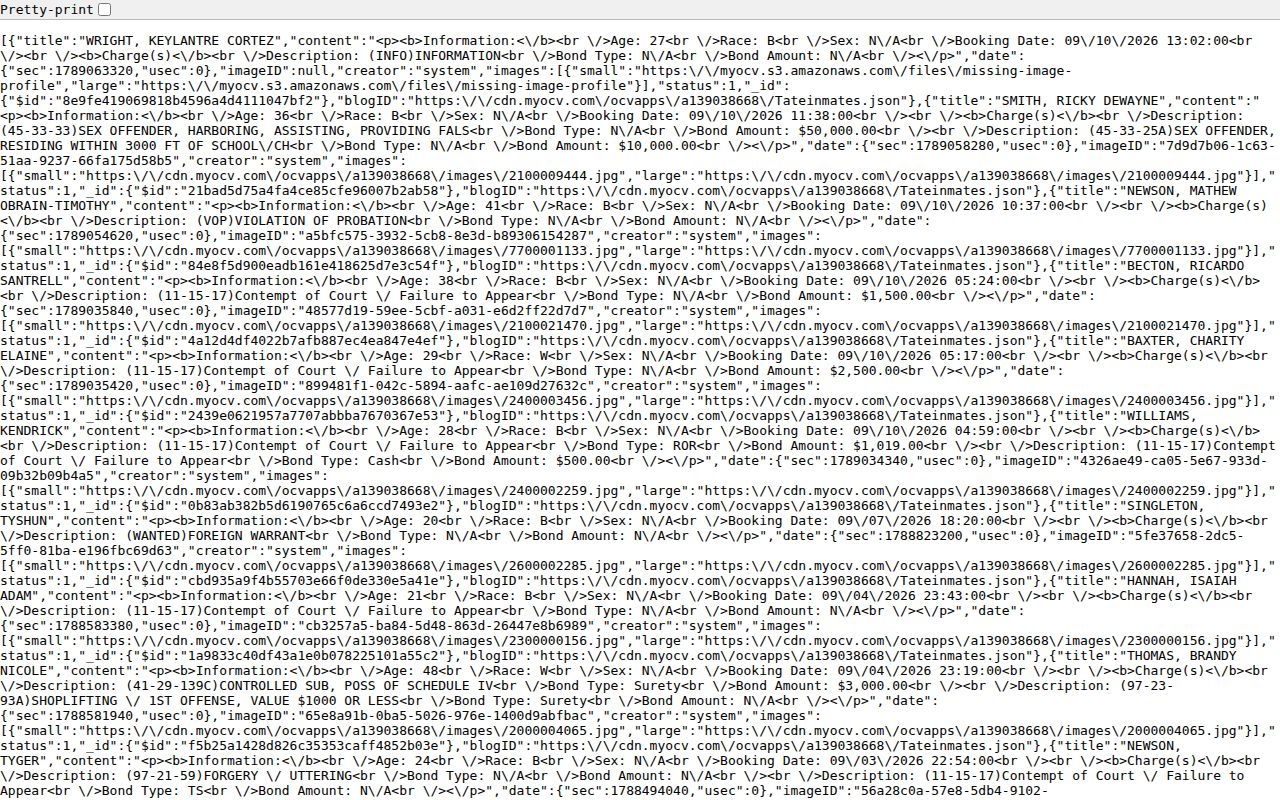
This source capture shows the feed format; individual entries and custody states can change.
Tate Arrest-Log Entry Fields
The official feed is booking-facing, not a court docket. It identifies the arrest event well enough to frame a records request. Plenty of legal questions stay open, though. Court dates and final outcomes rarely appear.
| Published field | How to read it |
|---|---|
| Display name | Use the exact official spelling and order. |
| Age, race, sex | Source values that may be incomplete or marked N/A. |
| Booking timestamp | Jail intake time, not necessarily arrest or posting time. |
| Charge or hold | The charge as entered at booking. |
| Bond type and amount | Terms tied to a charge; not proof of release. |
| Image | Present for many entries, absent or generic for others. |
| Feed status and ID | Platform metadata, not a final court record. |
A "wanted" or "foreign warrant" label comes straight from the booking source. Treat it as a tag, not a proven fact. The feed is a record of arrests, nothing more. No photographs are rehosted here, and no face list should be built from it.
Weekend Tate Arrest Postings
The sheriff publishes no fixed refresh schedule. Weekend and holiday arrests often land in clusters, and booking work can push a late arrest onto the next date's public view. Search adjacent dates and past the first results page.
Booking time and arrest time can differ. Transport from Senatobia, Coldwater, or rural Tate County often happens before processing wraps up. City arrests land in the county feed because Tate County Jail is the county booking destination. The entry rarely shows a reliable city field. Confirm the agency through an incident report or the arresting department itself.
A gap with no clear cause? Call Tate County Jail at 662-562-5466 for current custody. For records routing, use the sheriff's line, 662-562-4434, during its published weekday hours. Put requests in writing. Name the person, the date range, and the record series sought.
Tate Arrest News Runs Differently
For news, the Tate Record crime section is the county's strongest local outlet. Its pace is story-driven and uneven. An arrest, an investigation, a court development, or a public-safety event may each get coverage. It is no daily sheriff mirror. The paper's crime RSS feed tracks new stories.
This is the news-blotter difference. A roster lists booking fields, while journalism picks incidents and adds narrative. A story photo covers that event alone and says nothing about a standing mugshot policy. For the booking entry itself, return to the official roster. For the outcome, go to the court.
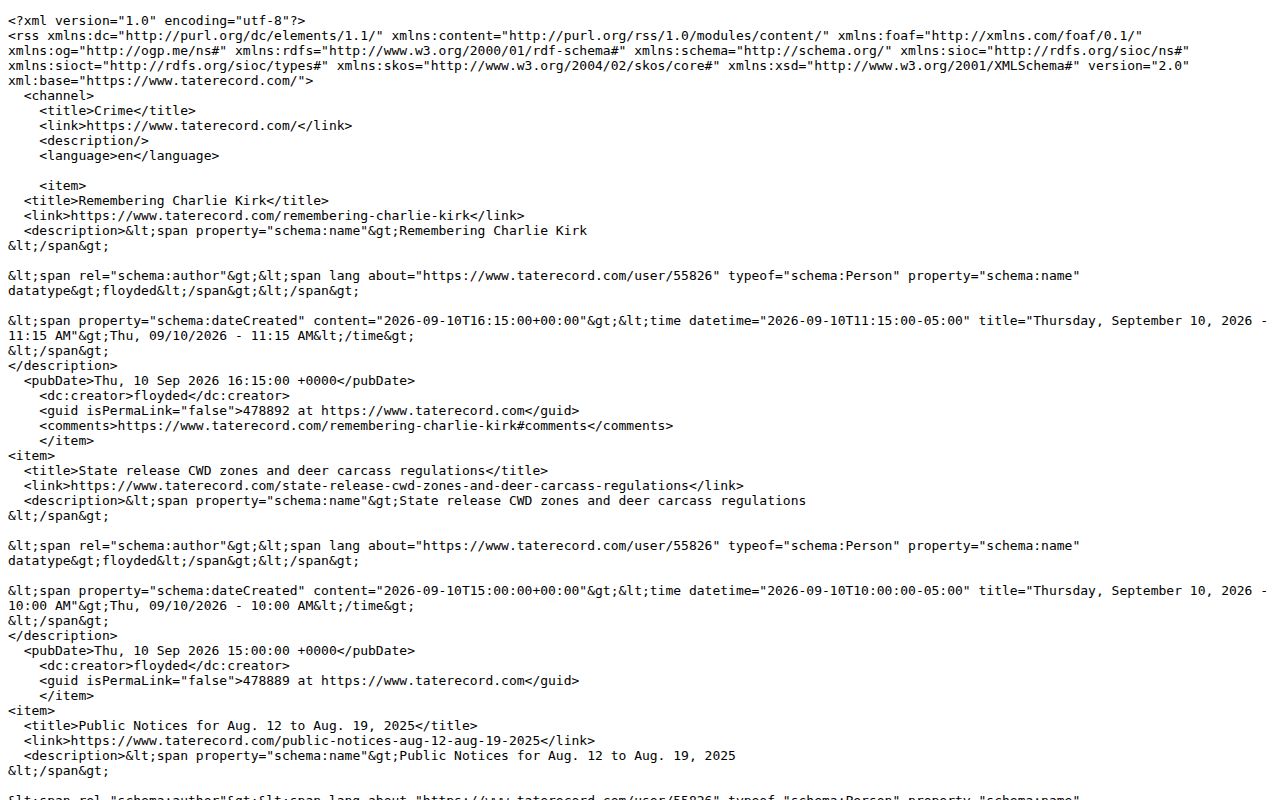
The capture shows a monitoring route, not a complete Tate County arrest log.
Multi-Agency Tate Arrest Reports
Big incidents can cross agency lines. Action News 5 reported a Senatobia barricade incident that drew Senatobia Police, the Tate County Sheriff, and DeSoto County law enforcement together. One story like that can explain an incident far better than a bare roster row. It still is not a countywide blotter.
The report credited charges to law-enforcement information available at publication. Later court events can shift the case. Regional outlets lean toward bigger Senatobia stories. Coldwater itself has no recurring blotter, and regional coverage rarely reaches it. County-held Coldwater bookings appear in the Tate County feed. When the arresting agency matters, request its own records.
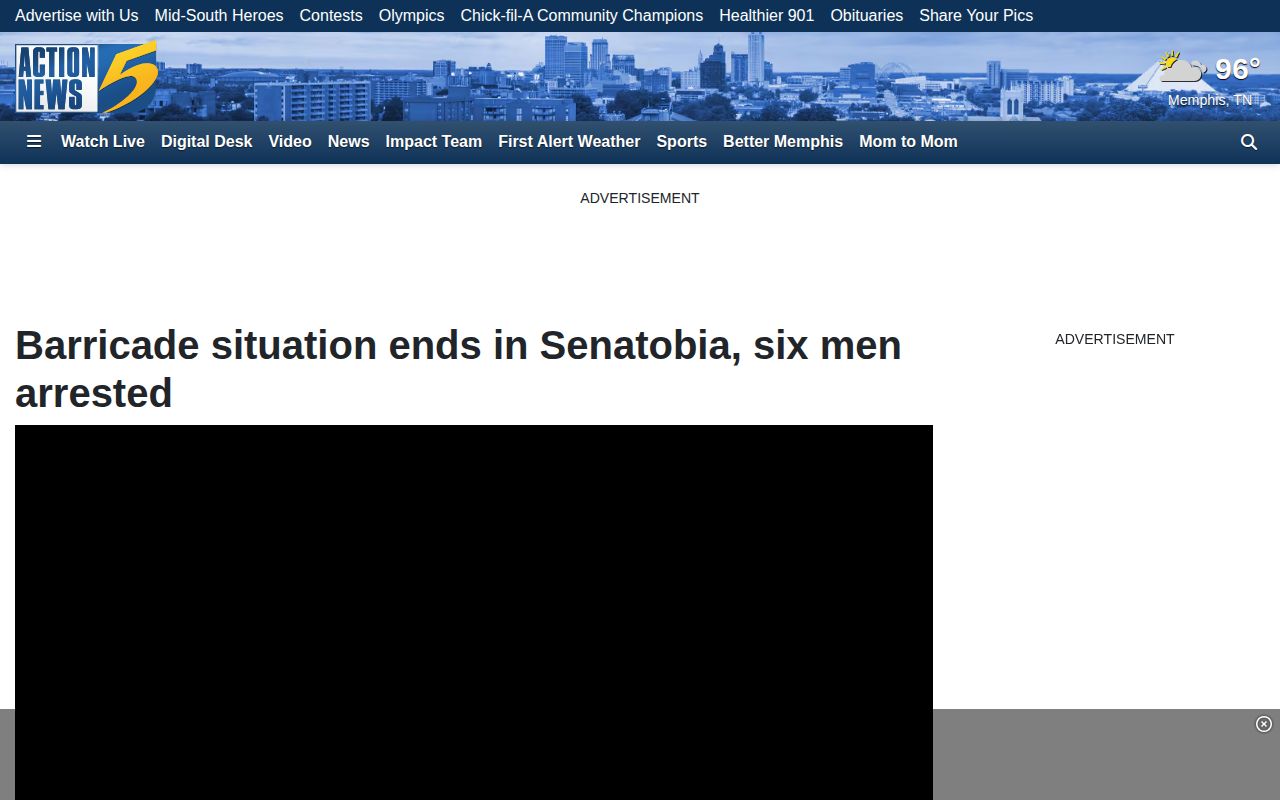
It shows selective coverage, never the full arrest log.
Tate Arrest Archives and Requests
Mississippi's Archives and History department sets the rules for old records. Local agencies may destroy records only under an approved schedule. Electronic files get the same treatment as paper ones. Some jail-record categories carry five-year retention periods. That does not guarantee every Tate County booking photo or roster export survives that long. Treat a website's visible depth as one thing and legal retention as another.
When an entry has aged out, request each item separately from the sheriff. Ask for a date-bounded booking record, a jail docket entry, and an incident report. Request any photograph still on file too. A proposed 2025 state schedule floated a ten-year booking-record category. Proposals are not rules. That draft carries no weight as Tate County policy. So precision here keeps a web page from being mistaken for the law itself.
The end of a case lives with the clerk. Contact the proper Tate County clerk, or use Mississippi Electronic Courts where it applies. For historical coverage, the Library of Congress catalog lists the Tate County Democrat. That Senatobia weekly began in 1925. That confirms the title's age, not any daily arrest archive. It also says nothing about a booking-photo collection.